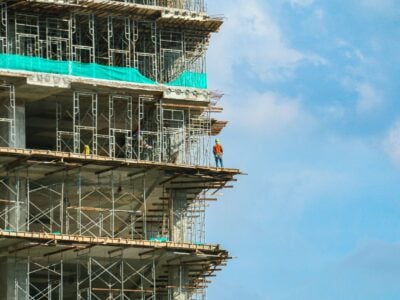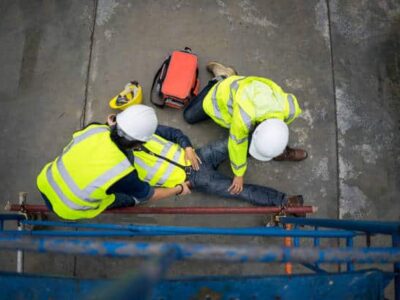
A construction accident is any unplanned, work-related incident on or around a construction site that results in injury, illness, or death.
New York’s Labor Law statutes, particularly § 200,§ 240(1), and § 241.
Create specific legal duties for property owners and contractors that go well beyond what most states require.
When those duties are violated and someone is hurt, the incident falls within a structured legal framework that can trigger workers’ compensation benefits, civil liability claims, and regulatory investigations simultaneously.
Prior results do not guarantee a similar outcome.
How Does New York Law Define a Construction Accident?
From a legal standpoint, a construction accident is not simply “getting hurt on a job site.” It is a work-related event that occurs during activities like building, demolishing, altering, repairing, or cleaning a structure, and that causes physical harm to a worker or another person lawfully present at the site.
The New York City Department of Buildings tracks these incidents in its public reporting as any occurrence at a construction site that produces an injury or fatality.
From a workers’ compensation perspective, the New York Workers’ Compensation Board defines a compensable work accident as any injury or illness that arises out of and in the course of employment.
On a construction site, this includes everything from a fall off scaffolding to a chemical exposure in an enclosed space to a repetitive stress injury from operating heavy machinery over weeks.
What makes construction accidents legally distinct in New York is the overlay of the Labor Law statutes.
Labor Law § 200 imposes a general duty on owners and contractors to ensure that workplaces are constructed, equipped, and operated so as to provide reasonable and adequate protection to all workers and others present.
Labor Law § 240(1) addresses elevation-related hazards specifically, requiring that scaffolds, ladders, hoists, and similar devices be properly constructed and placed.
Labor Law § 241 sets detailed safety requirements for construction, demolition, and excavation work, including the guarding of shaftways and stairwells and the proper arrangement of work areas.
When any of these statutory duties are breached and an injury results, the legal system treats the event as a construction accident with consequences that extend beyond standard workplace injury claims.
What Are the Most Common Types of Construction Accidents?
Safety researchers and OSHA have long identified four categories, often called the “Fatal Four,” that account for the majority of construction fatalities nationally: falls, struck-by incidents, electrocutions, and caught-in/between accidents.
Beyond those four, several other accident types account for a significant portion of construction injuries each year.
Falls From Heights
Falls from scaffolding, ladders, rooftops, and unguarded floor openings are the leading cause of construction fatalities. New York’s Scaffold Law (Labor Law § 240(1) exists specifically because of this risk, imposing strict liability on property owners and general contractors when adequate fall protection is not provided for elevation-related work.
Struck-By Incidents
Struck-by accidents occur when a worker is hit by a moving vehicle, piece of equipment, falling tool, or airborne material. These incidents are particularly common on sites where multiple trades are working simultaneously and where overhead work is happening above workers on lower levels. Labor Law § 240(1) can apply to struck-by accidents involving falling objects when the object was being hoisted or secured and adequate protection was not provided.
Caught-In and Caught-Between Accidents
These accidents occur when a worker is caught in or compressed by equipment, objects, or collapsing structures.
Trench collapses during excavation, workers caught between rotating machinery and a fixed surface, and crushing injuries during material hoisting operations all fall into this category. OSHA requires protective systems for excavations deeper than five feet, and failures to comply with those requirements are a common contributing factor in trench collapse fatalities.
Electrocutions
Contact with live electrical lines, unfinished wiring, improperly locked-out equipment, or energized panels is a persistent hazard on construction sites where electrical work is ongoing alongside other trades.
Electrocution deaths are particularly tragic because they are almost always preventable with proper lockout/tagout procedures and site coordination.
When an electrocution occurs because an owner or contractor failed to ensure proper isolation of energized sources, Labor Law § 200 and potential OSHA violations become central to the legal analysis.
Slips, Trips, and Same-Level Falls
Not every construction accident involves a fall from height. Debris-strewn walkways, uneven flooring in a building under renovation, materials left in passageways, and unmarked floor openings all create conditions for serious injuries even at ground level.
These accidents typically implicate Labor Law § 200 and § 241(6) claims, focusing on whether the responsible party had notice of the hazard and whether a specific Industrial Code provision governing walkways or housekeeping was violated.
Equipment and Machinery Accidents
Cranes, forklifts, concrete mixers, power saws, nail guns, and aerial lifts are standard equipment on most large construction sites.
When these equipment malfunction because it was not properly maintained, or when a defective component causes a tool to fail during normal use, the legal analysis can involve both the contractor who supplied or maintained the equipment and the manufacturer who put a defective product into commerce.
Product liability principles allow an injured worker to pursue the manufacturer directly without having to prove that the contractor was careless in the traditional sense.
Vehicle-Related Incidents
Construction sites generate substantial vehicle traffic, including delivery trucks, concrete mixers, and heavy equipment moving through and around the site. Workers directing traffic, unloading materials, or working near site entrances face exposure to vehicle-related injuries that may involve both workers’ compensation and third-party civil claims against the vehicle operator or the company that employed the driver.
How Common Are Construction Accidents in New York?
The data from New York makes clear that construction accidents are not a marginal phenomenon.
The NYC Department of Buildings publishes regular incident summaries tracking construction-related injuries and fatalities across all five boroughs, broken down by borough and project type, ranging from small residential renovations to high-rise developments.
While construction-related injuries in New York City fell to near 10-year lows in 2024 even as construction activity increased, the fatality picture is more troubling.
A 2024 report linked to Bureau of Labor Statistics data found that construction worker fatalities in New York City rose from 24 in 2022 to 30 in 2023, contributing to a statewide increase from 50 to 74 construction worker deaths.
Roughly three-quarters of those fatal incidents occurred at worksites that had prior OSHA violations on record, according to the same analysis
These numbers represent real people in physically demanding jobs who have every right to expect a safe workplace.
Who Is Covered After a Construction Accident?
Coverage after a construction accident depends on who was injured and where the accident occurred.
Construction workers are the primary protected class under both workers’ compensation law and New York’s Labor Law statutes.
However, the statutes’ protections are not limited to employees of the general contractor alone.
Workers’ compensation in New York covers most employees injured in the course of employment, including construction workers on union and non-union sites.
A claim is available regardless of who was at fault, as long as the injury was work-related. Labor Law § 240(1) and § 241 extend civil liability protections to workers engaged in construction, demolition, excavation, alteration, repair, or cleaning of buildings and structures, regardless of which subcontractor employs them.
What Safety Rules Are Supposed to Prevent These Accidents?
At the federal level, OSHA construction standards require fall protection at elevations of six feet or more, guardrails on scaffolding, trench protections for excavations deeper than five feet, and proper inspection and maintenance of ladders, hoists, and power tools.
OSHA also requires employers to report fatalities within eight hours and serious injuries within 24 hours.
At the state level, New York’s Labor Law statutes impose duties on owners and general contractors directly, not just on employers.
This is a critical distinction from federal OSHA rules, which run between the federal government and the employer.
Labor Law §§ 200, 240, and 241 create civil liability for owners and contractors even when OSHA has not cited them.
New York City adds a local layer through Local Law 196, which requires construction and demolition workers to complete 30 hours of safety training plus an additional 10 hours of OSHA-based training, and mandates designated site safety managers on qualifying projects.
This training requirement reflects the city’s recognition that a significant share of serious accidents involve workers who were never adequately trained to identify or respond to the hazards they were exposed to.
What Happens Legally After a Construction Accident?
Under New York law, an injured worker has the right to file a workers’ compensation claim for medical treatment and partial wage replacement without having to prove that anyone was at fault.
The process is administered through the New York Workers’ Compensation Board, and benefits are generally available regardless of whether the employer violated any safety rules.
Separately from workers’ compensation, an injured worker may have civil claims under Labor Law §§ 200, 240, and 241 against the property owner, the general contractor, and potentially other parties at the site.
These claims are pursued through the court system, not the workers’ compensation board, and they can yield compensation for pain and suffering, full lost wages, and other damages that workers’ compensation does not cover.
On the regulatory side, a construction accident that involves serious injury or death typically triggers a DOB investigation and an OSHA inspection.
Find out how New York Labor Law and workers' compensation protections may help you pursue financial recovery.
Frequently Asked Questions
What is the legal definition of a construction accident?
A construction accident is a work-related incident occurring during construction, demolition, excavation, alteration, repair, or cleaning of a building or structure that results in injury, illness, or death to a worker or another person lawfully present at the site. Under New York’s Labor Law statutes, the event also triggers potential civil liability for property owners and general contractors when safety obligations under §§ 200, 240, or 241 were not met.
What is the most common type of construction accident?
Falls from heights are consistently the most common and most deadly category of construction accident. Falls from scaffolds, ladders, rooftops, and unguarded floor openings account for the largest share of construction fatalities nationally and in New York.
Do construction accidents only happen to workers?
No. While construction workers are the primary protected class under New York’s Labor Law statutes and workers’ compensation system, construction accidents can and do injure people who are not employed at the site. Passersby struck by falling debris, pedestrians injured near an unsecured construction zone, and visitors to a site who encounter an unguarded hazard can all be injured in incidents that qualify as construction accidents.
How does workers’ compensation work after a construction accident?
Workers’ compensation in New York provides medical treatment and partial wage replacement to injured workers without requiring them to prove that their employer or anyone else was at fault. A claim is filed with the New York Workers’ Compensation Board, and benefits begin once the claim is accepted. Workers’ comp covers medical expenses and approximately two-thirds of the worker’s average weekly wage up to a statutory cap, but it does not compensate for pain and suffering.
Can I sue the property owner after a construction accident?
In many cases, yes. New York’s Labor Law statutes particularly §§ 200, 240, and 241 impose direct legal duties on property owners and general contractors that are separate from the workers’ compensation system. These civil claims are not barred by the workers’ compensation exclusive remedy rule, which applies only to claims against the direct employer..
What role does OSHA play after a construction accident?
OSHA documents specific safety failures, establishes what the applicable standard of care required, and shows that the responsible party knew or should have known about the hazard. In cases where the accident site had prior OSHA violations on record, those prior citations can further demonstrate a pattern of non-compliance.
What is New York Local Law 196 and how does it relate to construction accidents?
Local Law 196 is a New York City law that requires construction and demolition workers on qualifying sites to complete 30 hours of general safety training plus an additional 10 hours of OSHA-based training. The law also mandates designated site safety managers or coordinators on projects that meet certain thresholds for size and risk.
Should I report a construction accident to my employer?
Yes, and you should do so as soon as possible. Most workers in New York are required to notify their employer of a work-related injury within 30 days under the workers’ compensation statute, and failing to report promptly can complicate a claim. Beyond the legal requirement, a timely incident report creates an official record that is difficult to dispute later.
What is the deadline to file a lawsuit after a construction accident in New York?
For construction accidents on privately owned property, the general statute of limitations for a personal injury lawsuit is three years from the date of the accident under CPLR § 214. If the property is owned by a government entity, municipality, or public authority, a Notice of Claim must be filed within 90 days of the accident before any lawsuit can be initiated.
How do I know if I have a Labor Law claim after a construction accident?
Whether a Labor Law claim is available depends on the specific type of accident, the work being performed at the time, and who owned and controlled the property. If the accident involved a fall from height or a struck-by injury from a falling object during construction, demolition, alteration, repair, or cleaning of a structure, Labor Law § 240(1) may apply. If the accident involved a site condition or safety regulation violation in a construction, excavation, or demolition setting, § 241(6) may be relevant. If the condition was one that the owner or contractor knew about or should have discovered through reasonable inspection, § 200 applies.
Summing It Up
A construction accident is a legally defined category of event, not just any workplace mishap that sits at the intersection of New York’s Labor Law statutes, federal OSHA standards, workers’ compensation law, and civil liability principles.
The most common types include falls from height, struck-by incidents, electrocutions, caught-in accidents, slips and trips, equipment failures, and vehicle-related incidents.
Each type carries its own legal implications, and the specific facts of the accident determine which statutes apply and who can be held responsible.
If you or someone you care about was injured on a construction site, understanding the legal landscape is the first step. The attorneys at Porter Law Group represent injured workers in construction accident cases and can help you understand what claims may be available and who bears responsibility for what happened. Contact us today to discuss your situation.
This article is intended for general informational purposes and does not constitute legal advice. Construction accident cases are highly fact-specific and depend on the statutes and circumstances applicable to your situation. Prior results do not guarantee a similar outcome.
Authored by Michael S. Porter, J.D., co-founder of Porter Law Group.