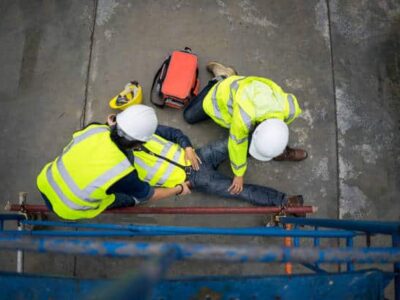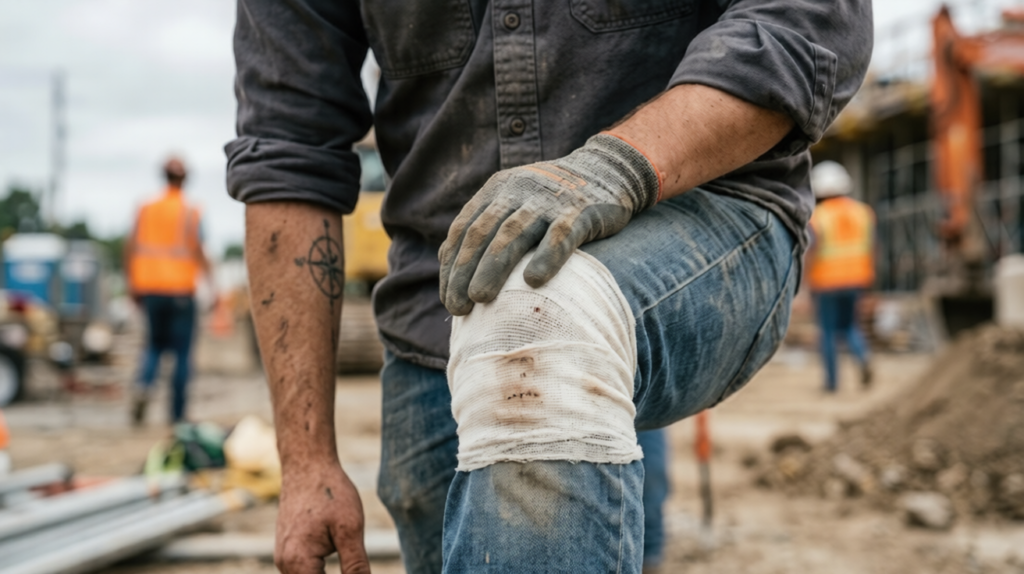
Construction injuries can be deceptive. Adrenaline masks pain. Soft tissue damage, internal bleeding, and traumatic brain injuries don’t always announce themselves at the scene.
Waiting to seek treatment is one of the most common and costly mistakes injured workers make, not just medically, but legally.
Insurance carriers and defense attorneys scrutinize gaps in medical treatment. If you didn’t seek care within hours of your accident, the argument will follow that you weren’t seriously hurt. That narrative is difficult to overcome later.
Getting evaluated right away creates a contemporaneous medical record that connects your injuries directly to the incident, which is foundational to any claim you bring.
Beyond your health, the first hour is also your best window for preserving evidence. Worksites change fast. Scaffolding gets repaired. Debris gets cleared. Equipment gets moved or replaced. A hazardous condition that caused your fall at 9 a.m. may not exist in the same form by noon.
Whatever you or someone nearby can document right away has the best chance of surviving.
Prior results do not guarantee a similar outcome.
What Should You Do Immediately After a Construction Site Accident
Call 911 or have someone call for you if the injury is serious. Do not refuse transport to a hospital out of concern for the disruption it causes on the job.
Under New York workers’ compensation law, medical treatment is a covered benefit regardless of whether any time is missed from work, per the New York Workers’ Compensation Board.
You are entitled to have necessary care paid for by your employer’s workers’ compensation carrier from the moment the injury occurs.
Even if you feel okay at the scene, go to urgent care or an emergency room the same day. Hidden harm such as a traumatic brain injury may not be obvious right away. Document every symptom, no matter how minor it seems.
Tell a Supervisor Before You Leave the Site
New York workers’ compensation rules require that you notify your employer of a workplace injury within 30 days, per the Workers’ Compensation Board’s filing guidance.
Written notice is best. If you can, tell your foreman or site supervisor directly and make sure the incident is logged. If you cannot do it yourself because of your injuries, have someone do it on your behalf.
Missing this notice deadline can jeopardize your benefits. Courts and the Workers’ Compensation Board take the notice requirement seriously, and employers and their insurers will use any gap in reporting against you.
Document the Scene Before You Leave
If you are physically able to do so, take photographs and video of the exact location where the accident happened. Capture the condition of the scaffolding, ladders, floor surfaces, protective equipment (or the absence of it), guardrails, lighting, and any debris or obstacles involved.
Get the names and contact information of witnesses. Even coworkers who saw what happened may be reluctant to speak later under job pressure, so having their information early is critical.
This documentation is particularly important in New York because civil liability claims under New York Labor Law §§ 200, 240(1), and 241(6) often turn on whether a specific unsafe condition existed at the site. Photographs taken within minutes of an incident are far more persuasive than reconstructed accounts taken weeks later.
How Does Workers’ Compensation Work After a Construction Accident
Nearly all employers in the state are required to carry coverage under New York Workers’ Compensation Board requirements. You do not need to prove your employer did anything wrong to receive medical benefits and wage replacement.
Lost wage benefits generally begin after more than seven days of disability, and the first seven days are unpaid unless the disability extends beyond 14 days, at which point benefits are paid retroactively to day one, per Board guidance on lost wage benefits.
As of January 1, 2025, the minimum weekly benefit is $325, with an indexing adjustment scheduled for July 1, 2026, per New York Workers’ Compensation Board Subject Number 046.
Key Workers’ Compensation Deadlines
| Action | Deadline |
| Notify employer of injury | Within 30 days |
| File workers’ compensation claim | As soon as possible; prompt filing is critical |
| Lost wage benefits begin | After more than 7 days of disability |
| Benefits paid retroactively | If disability exceeds 14 days |
| Minimum weekly benefit (as of Jan. 1, 2025) | $325 per week |
How New York Labor Law Protects Construction Workers
New York has some of the strongest construction worker protections in the country, built into three sections of the Labor Law.
Labor Law § 240(1), often called the Scaffold Law, imposes absolute liability on property owners and general contractors for gravity-related injuries at construction sites. If a worker falls from a ladder, scaffold, or elevated surface, or is struck by a falling object, and proper safety equipment was not provided or was inadequate, the owner and contractor are liable, full stop. These scaffolding and fall accidents frequently fall under the Scaffold Law. The worker does not need to prove they were negligent. This is called a nondelegable duty, per Cornell Law’s case summaries on § 240(1). It is one of the most powerful legal tools available anywhere in construction injury law, and it is unique to New York.
Labor Law § 241(6) requires that construction, excavation, and demolition sites be maintained with reasonable and adequate protection. Claims under this section are tied to specific violations of New York’s Industrial Code, which governs everything from floor openings to lighting requirements to machine safeguarding. A § 241(6) claim requires identifying the specific code provision that was violated and connecting that violation to the injury. Our overview of Labor Law 241 protections explains how this works.
Labor Law § 200 is the general safe-workplace statute. It applies when the owner or contractor had control over the work being performed or actual knowledge of the dangerous condition. Unlike § 240(1), it is not an absolute liability standard, but it opens the door to claims even in non-elevation-related accidents.
Not every construction accident triggers these statutes. They apply primarily to workers performing construction, demolition, or excavation work, and the specific facts of how the injury occurred matter considerably. But when they do apply, they can significantly increase the value and viability of a civil claim. Learn more about suing after a construction accident in New York.
What Are the Deadlines for a Construction Accident Lawsuit in New York
The general statute of limitations for personal injury in New York is three years from the date of the accident, under CPLR § 214.
Miss that deadline and your civil claim is permanently barred, regardless of how strong the facts are.
If the accident happened on a property owned or operated by a government entity, a city agency, or a public authority, the rules are significantly stricter. A Notice of Claim must be filed within 90 days of the injury, and failure to do so is almost always fatal to a lawsuit against a municipality. This shortened window catches many injured workers off guard.
OSHA imposes its own reporting requirements on employers. Work-related fatalities must be reported to OSHA within 8 hours. Inpatient hospitalizations, amputations, or the loss of an eye must be reported within 24 hours, per OSHA’s severe injury reporting page.
OSHA also requires fall protection in construction when workers are at heights of six feet or more, per OSHA’s fall protection standards for construction. Construction fall accidents remain the leading cause of jobsite fatalities. Falls are the leading cause of fatalities in the construction industry nationally, and the presence or absence of required fall protection is often central to establishing liability in a New York Labor Law claim.
Find clear information about workers' compensation, third-party claims, and New York Labor Law protections.
Frequently Asked Questions
What should I do first after a construction accident at work?
The first step after a construction accident is to get medical attention immediately, even if you feel able to continue working. Delaying treatment creates gaps in your medical record that insurers use to minimize your claim. Under New York workers’ compensation law, medical care is a covered benefit from the moment the injury occurs, regardless of whether you miss any time from work. After seeking care, notify your supervisor of the injury in writing as soon as possible. New York requires workers to notify their employer within 30 days of a workplace injury or risk losing benefits.
Can I sue my employer after a construction accident in New York?
In most situations, no. New York follows the “exclusive remedy” rule under workers’ compensation law, which means your employer is generally shielded from personal injury lawsuits in exchange for providing workers’ compensation coverage. However, you may still have claims against other parties involved in the site, including the property owner, the general contractor, a subcontractor, or an equipment manufacturer. These third-party claims are governed by tort law and allow recovery for pain and suffering, future lost income, and other damages that workers’ compensation does not cover.
What is New York Labor Law Section 240 and how does it affect my claim?
New York Labor Law § 240(1), commonly called the Scaffold Law, imposes absolute liability on property owners and general contractors for gravity-related construction injuries. If a worker falls from a height or is struck by a falling object because adequate safety equipment was not provided or failed, the owner and general contractor are liable regardless of their degree of negligence or awareness. This nondelegable duty is unique to New York and makes gravity-related construction injury claims here significantly stronger than in other states. The law applies to construction, demolition, and repair work, and the specific circumstances of the fall determine whether § 240(1) coverage is triggered.
How long do I have to file a lawsuit after a construction accident in New York?
The statute of limitations for a personal injury claim in New York is generally three years from the date of the accident, under CPLR § 214. However, if the property is owned or operated by a government entity, a city agency, or a public authority, a Notice of Claim must be filed within 90 days of the injury. Missing that 90-day window is almost always fatal to a lawsuit against a municipality. Workers’ compensation claims have their own timelines, including the 30-day employer notification requirement, which is separate from the civil lawsuit deadline.
What damages can I recover in a construction accident lawsuit?
In a third-party construction injury lawsuit in New York, you may be entitled to economic damages such as past and future medical expenses, past and future lost wages, and the cost of long-term care or rehabilitation. You may also recover non-economic damages including pain and suffering, loss of enjoyment of life, and in some cases loss of consortium for a spouse. Workers’ compensation covers medical bills and a portion of lost wages but does not compensate for pain and suffering. A civil claim under New York Labor Law can substantially increase the total recovery available, particularly in cases involving permanent injuries.
Does workers’ compensation cover all my losses after a construction accident?
No. Workers’ compensation in New York covers necessary medical treatment and approximately two-thirds of your average weekly wage while you are disabled, up to a maximum benefit amount set by the state. It does not compensate you for pain and suffering, emotional distress, or the full value of your lost income. The minimum weekly benefit as of January 1, 2025, is $325, per the New York Workers’ Compensation Board. For serious injuries, the gap between workers’ compensation benefits and full damages can be substantial, which is one reason why identifying third-party civil liability claims matters so much in construction cases.
What is a third-party claim in a construction accident case?
A third-party claim is a personal injury lawsuit filed against someone other than your direct employer who bears legal responsibility for your injuries. On a construction site, this typically means the property owner, general contractor, a subcontractor whose crew created the hazard, an equipment manufacturer, or a scaffolding company. Because these parties are outside the workers’ compensation system, they can be sued for the full range of personal injury damages, including pain and suffering. If your workers’ compensation carrier has paid benefits, they will typically have a lien against your third-party recovery, but in most significant injury cases the civil recovery far exceeds what workers’ comp pays out.
What is the 90-day Notice of Claim rule for construction accidents involving government property?
If your construction accident occurred on a property owned, operated, or controlled by a government entity, such as a city agency, public authority, or municipality, you must file a Notice of Claim within 90 days of the injury before you can sue that entity. This is a strict procedural requirement that courts rarely waive. Missing the 90-day deadline is generally fatal to any lawsuit against the government defendant, even if you file a civil suit within the regular three-year statute of limitations. If there is any possibility that a government entity is involved in your accident, speaking with an attorney immediately is critical given how quickly this deadline arrives.
Do I need a lawyer after a construction accident at work?
You are not legally required to hire a lawyer, but in serious construction injury cases, attempting to handle both the workers’ compensation claim and a potential Labor Law civil claim without legal representation significantly increases the likelihood of leaving compensation behind. New York Labor Law claims involve complex liability frameworks, and building the right evidentiary record from the start requires legal knowledge. Most construction accident attorneys in New York work on a contingency fee basis, meaning there is no upfront cost and no attorney fee unless money is recovered on your behalf. A legal consultation costs nothing and gives you a clear picture of what claims may be available.
What evidence should I collect after a construction site accident?
Immediately after a construction accident, document the scene as thoroughly as possible. Photograph or video the location where the accident occurred, the condition of any equipment or structures involved, the absence of guardrails or safety gear, debris, floor conditions, and any visible hazards. Collect the names and contact information of witnesses. Keep copies of all incident reports, medical records, prescriptions, and correspondence with your employer or workers’ compensation insurer. Preserve any damaged equipment or clothing if possible. This evidence is particularly important in New York Labor Law cases, where liability often turns on whether a specific unsafe condition existed at the time of the accident.
Summing It Up
A construction accident sets off a sequence of legal and procedural requirements that unfold quickly. Medical care comes first. Reporting the injury to your employer comes next, within 30 days under New York workers’ compensation rules. If you were hurt on a job site, our construction accident attorneys can evaluate your claim. Preserving evidence at the scene, filing your workers’ compensation claim, and understanding whether a Labor Law civil claim applies against a property owner or general contractor are the steps that follow.
New York Labor Law § 240(1) imposes absolute liability on owners and contractors for gravity-related injuries when proper safety protections were absent. That standard gives injured workers in New York significantly more legal leverage than exists in most other states. But that leverage depends entirely on building the case correctly from the beginning.If you were injured on a construction site in New York and have questions about your rights, the Syracuse construction accident lawyers at Porter Law Group are available to evaluate your situation. Reach out through our contact page for a consultation.