
Proving a property owner’s negligence in a New York premises liability case requires more than just showing you were injured on their property. You must build a compelling legal case that demonstrates the owner failed to maintain safe conditions—and that this failure directly caused your injuries. Since New York’s landmark Basso v. Miller decision in 1976 established a unified standard of reasonable care for all visitors, success depends on proving four key elements, gathering strong evidence and countering common defenses.
Prior results do not guarantee a similar outcome.
At the Porter Law Group, we’ve successfully proven property owner negligence in numerous of premises liability cases throughout New York State, securing substantial compensation for our clients. We understand that building a winning case requires immediate action, thorough investigation, and strategic presentation of evidence. If you’ve been injured due to a property owner’s negligence, contact us at 833-PORTER9 or email info@porterlawteam.com for a free consultation to discuss how we can help prove your case.
Understanding New York’s Legal Framework
The Basso Standard: Reasonable Care for All
Before 1976, New York law categorized visitors as invitees, licensees, or trespassers, with property owners owing different levels of care to each group. The Basso v. Miller decision changed that, replacing those rigid classifications with a single standard: property owners must maintain their premises in a “reasonably safe condition” for all lawful visitors.
This means whether you’re a customer in a store, a guest at someone’s home, or a worker on a construction site, the property owner owes you a duty of reasonable care. The level of care required depends on factors like:
- Foreseeability of harm
- Likelihood of injury
- Burden of preventing the risk
- Your purpose for being on the property
- The nature of the property itself
Why This Standard Matters
The unified reasonable care standard benefits injured parties because by focusing on the circumstances of each case rather than arbitrary visitor classifications. However, you must still prove that the property owner failed to act as a “reasonably prudent person” would under similar conditions.
The Four Essential Elements of Negligence
Element 1: Duty of Care
The first element requires proving that the property owner owed you a duty to maintain safe conditions. In most cases, this is straightforward because New York law generally recognizes that property owners have a duty to keep their premises reasonably safe for lawful visitors.
Examples of Duty:
- Stores must regularly inspect floors for spills and tripping hazards
- Landlords must maintain common areas like stairwells and parking lots
- Homeowners must warn guests of known hidden dangers
- Municipalities must maintain public sidewalks and roads
Factors That Establish Duty:
- The property owner’s control over the premises
- Your legal right to be on the property
- The relationship between you and the property owner
- The purpose of your visit
Element 2: Breach of Duty
This is often the most challenging element to prove because you must demonstrate that the property owner failed to meet their duty of reasonable care. Breach can occur through action or inaction, and courts evaluate whether the owner’s conduct departed from what a reasonable person would do.
Types of Breach:
Failure to Inspect: Not checking the property regularly enough to discover hazards
- Example: A grocery store that doesn’t inspect produce aisles hourly for dropped items.
Failure to Repair: Knowing about a dangerous condition but failing to fix it
- Example: A landlord ignores complaints about a broken stair.
Failure to Warn: Not alerting visitors to known dangers that can’t be immediately fixed
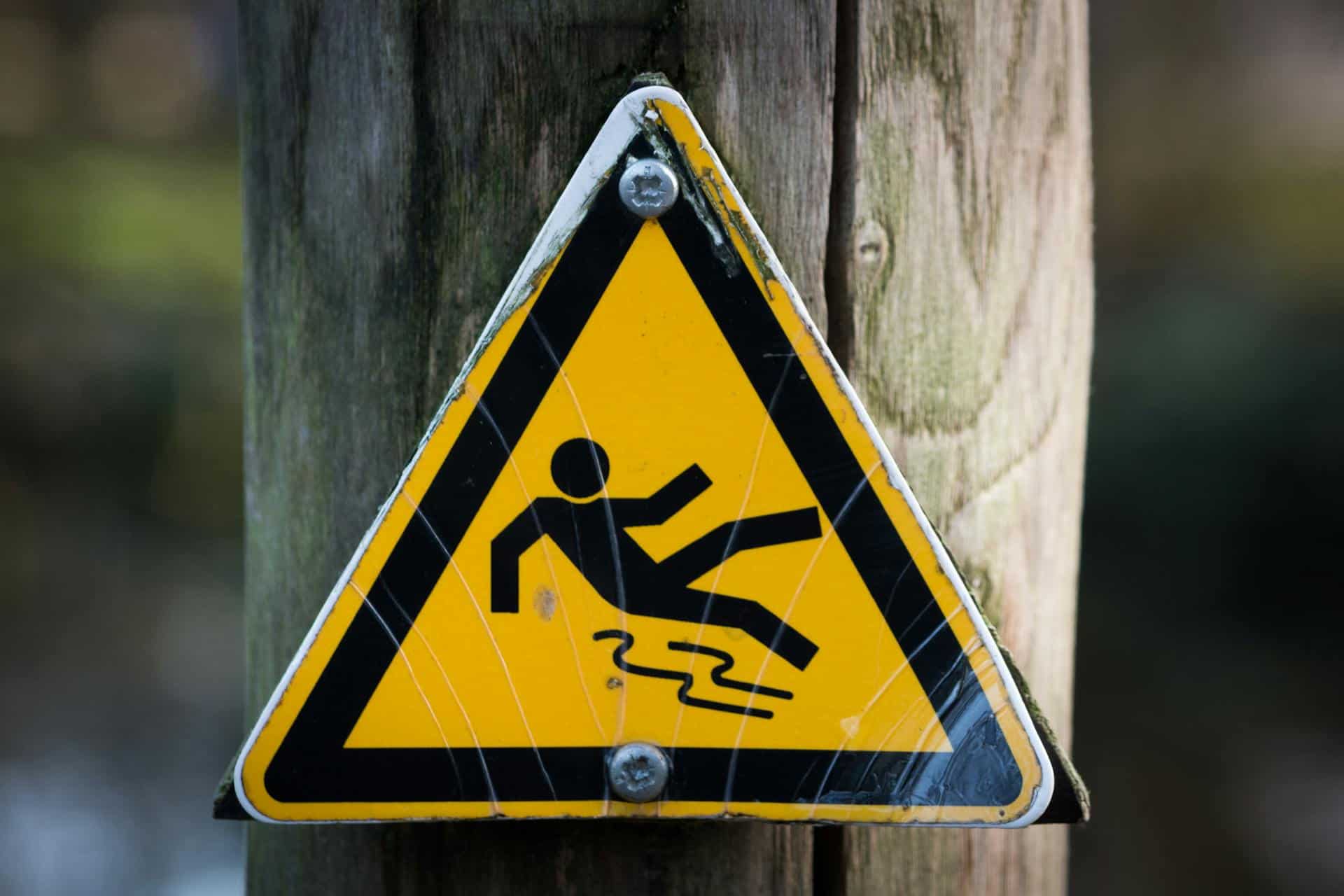
- Example: A restaurant that doesn’t put up “wet floor” signs after mopping.
Creating the Hazard: The owner or their employees directly caused the dangerous condition
- Example: A maintenance worker leaves tools blocking a walkway.
Element 3: Causation
You must prove that the property owner’s breach of duty directly caused your injuries. This involves two types of causation:
Factual Causation: The “but for” test – but for the property owner’s negligence, would your injury have occurred?
Proximate Causation: Was your injury a foreseeable result of the property owner’s negligence?
Evidence for Causation:
- Medical records linking your injuries to the accident
- Expert testimony (e.g., accident reconstruction)
- Witness statements about how the accident occurred
- Documentation of the dangerous condition
Element 4: Damages
Finally, you must prove that you suffered actual damages as a result of the property owner’s negligence. Damages can be economic or non-economic:
Economic Damages:
- Medical expenses (past and future)
- Lost wages and reduced earning capacity
- Property damage
- Out-of-pocket expenses related to your injury
Non-Economic Damages:
- Pain and suffering
- Emotional distress
- Loss of enjoyment of life
- Disfigurement or scarring
The Critical Concept of Notice
One of the most important aspects of proving breach is establishing that the property owner had “notice” of the dangerous condition. Notice comes in two forms:
Actual Notice: Direct knowledge of the hazard
- Written complaints from tenants or customers
- Employee reports of dangerous conditions
- Incident reports from previous accidents
- Work orders that were never completed
- Direct observation by the owner or management
Constructive Notice: The hazard existed long enough that reasonable inspection should have discovered it
- A spill that’s been on a store floor for hours
- A sidewalk crack that’s been growing for months
- Ice that remains 24+ hours after a storm ends
- Debris that accumulated over time
Proving Notice Through Evidence
Documentation Methods:
- Timestamped photographs showing the hazard’s development
- Weather records for slip and fall cases involving ice or water
- Maintenance logs revealing inspection gaps
- 311 complaints for government property issues
- Witness testimony about how long conditions existed
The “Mode of Operation” Theory: In some cases, you can prove constructive notice by showing that the property owner’s business practices regularly create dangerous conditions. For example, a self-service produce area where customers regularly drop items on the floor creates a foreseeable hazard that requires frequent inspection.
Overcoming Common Defenses
The “Open and Obvious” Defense
Property owners often argue that dangerous conditions were so obvious that visitors should have seen and avoided them. However, this defense doesn’t apply when:
- The hazard is dangerous despite being visible
- Visitors cannot reasonably avoid the hazard
- Lighting or layout obscures the hazard
- The condition looks safer than it is
Countering the Defense:
- Prove the hazard was more dangerous than it appeared
- Show that environmental factors made observation difficult
- Demonstrate that you had no reasonable way to avoid the danger
- Present evidence that the condition violated safety standards
The “Storm in Progress” Doctrine
In winter slip and fall cases, property owners may claim immunity during active precipitation. However, this defense has limits:
When It Applies:
- During active snowfall or freezing rain
- For a reasonable time after precipitation ends
- When natural accumulation creates the hazard
Overcoming the Defense:
- Proving adequate time passed after the storm to take action
- Pointing out failure to follow snow removal procedures
- Highlighting that poor drainage or structural issues worsened the danger
- Presenting evidence that the hazard existed before the storm
Comparative Negligence Challenges
New York’s pure comparative negligence system reduces your compensation by your percentage of fault. Common arguments include:
Typical Fault Claims:
- Walking while distracted (e.g., cell phone use)
- Wearing inappropriate footwear
- Ignoring posted warning signs
- Entering restricted areas
Minimizing Comparative Fault:
- Emphasizing the property owner’s primary responsibility
- Showing that the hazard would have caused injury regardless
- Demonstrating that your conduct was reasonable under the circumstances
- Presenting evidence that the danger was hidden or unavoidable
Reach out to our experienced team for a free consultation.
Why Experienced Legal Representation Is Essential
Proving property owner negligence involves navigating complex legal standards, gathering strong evidence, and building a persuasive case. Experienced attorneys play a crucial role in this process by bringing essential resources and skills. They have access to investigation tools, including experts and advanced technology, to ensure comprehensive evidence collection. Their deep legal expertise helps them stay updated on evolving case law and procedural requirements, while their negotiation skills allow them to strategically present cases for maximum settlements. Additionally, their trial experience ensures they can effectively argue before a jury when necessary.
At The Porter Law Group, we take a proactive approach to proving negligence. Our team responds immediately, launching immediate investigations to preserve critical evidence. We collaborate with multiple experts to build compelling cases and strategically develop the strongest legal arguments. Our aggressive advocacy ensures we fight for maximum compensation at every stage, whether through negotiation or litigation. With a focus on thorough preparation and persuasive presentation, we work tirelessly to hold negligent property owners accountable and secure the best possible outcome for our clients.
Contact a New York Premises Liability Attorney Today
Proving property owner negligence in New York requires systematic attention to legal elements, compelling evidence, and strategic presentation. While the process can be complex, understanding these requirements helps you take the right steps from the moment your accident occurs.
Remember that evidence disappears quickly, witnesses forget details, and procedural deadlines approach fast. The actions you take immediately after your injury can determine whether you can successfully prove the property owner’s negligence and recover the compensation you deserve.
Don’t let the complexity of premises liability law or aggressive insurance company defenses prevent you from seeking justice. The experienced attorneys at the Porter Law Group have the knowledge, resources, and commitment necessary to prove even the most challenging negligence cases.
Contact us today at 833-PORTER9 or email info@porterlawteam.com for a free consultation. We’ll evaluate your case, explain how to prove the property owner’s negligence, and fight for the compensation you deserve.
We work on a contingency fee basis, meaning you pay no attorney fees unless we successfully prove your case and recover compensation for you. Your injuries are real, the property owner’s negligence caused them, and you deserve full compensation for your damages. Let us help you prove your case and secure the justice you deserve.